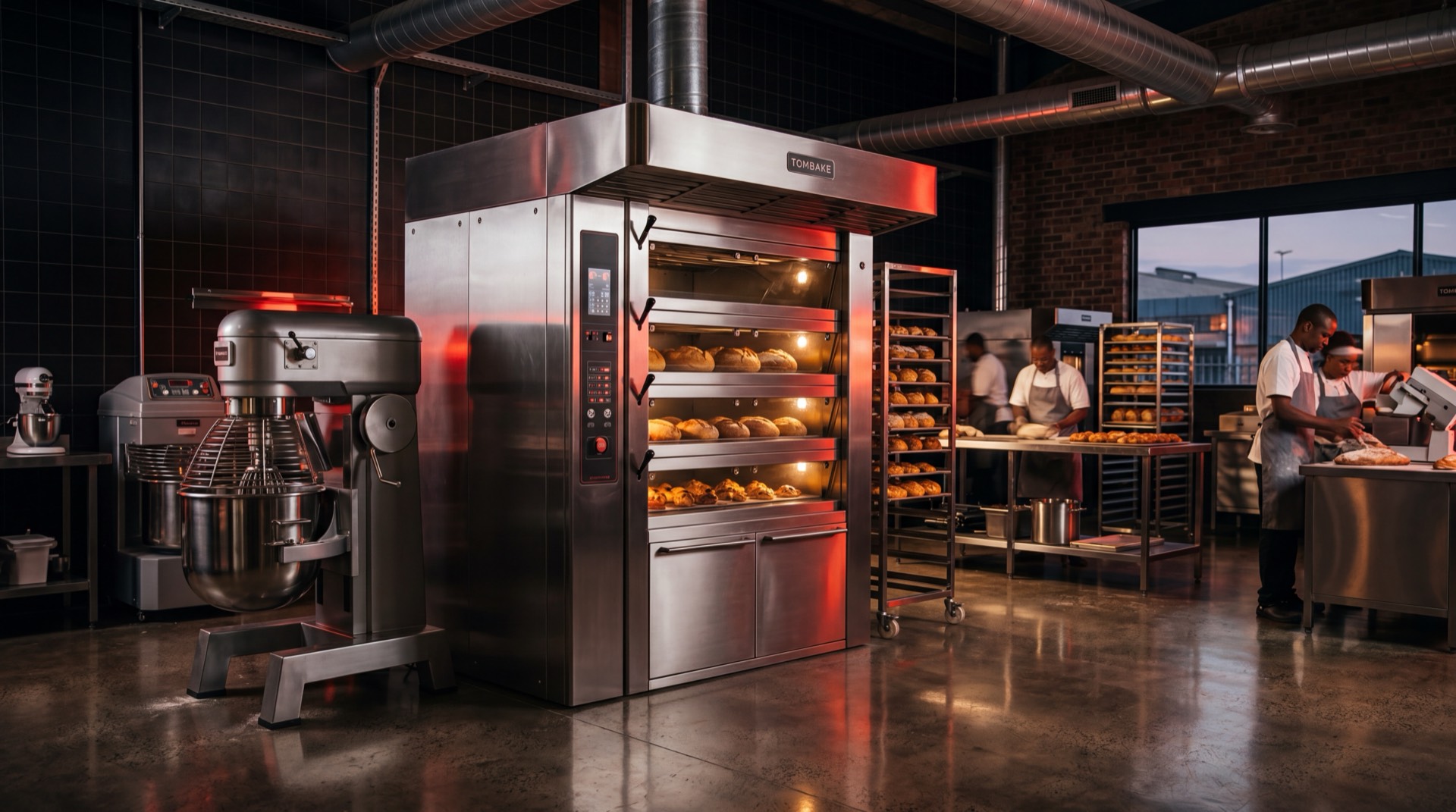
Rent an Oven
Get the oven.
Keep your working capital.
Rent your next Tombake oven as a monthly operating expense — fully tax-deductible, off your balance sheet, and with no large upfront cash outlay. The equipment goes in. The cash stays put.
Six reasons renting
often beats buying.
Keep your working capital
No large upfront cash outlay. Reserves stay intact and ready for what they're actually for — stock, staff, growth.
Credit lines stay free
Your overdraft and loan facilities remain available to finance other assets, not tied up in equipment.
Monthly VAT, not upfront
VAT is raised on the monthly rental — not capitalised on day one. Easier on cashflow from the very first month.
100% tax deductible
The full rental is a tax-deductible operating expense, unlike a cash purchase where only depreciation is claimable.
Off-balance sheet
The rental is an operating expense on the income statement — not a liability on the balance sheet — so it won't drag your ratios or borrowing ability.
Less administration
No depreciation schedules to track, no asset registers to maintain. One monthly line item, deducted in full.
Cash, rental, lease —
how do they actually compare?
Eight financial factors. Three ways to acquire the same oven. The rental column is highlighted because, for most operators, it's the path that protects cashflow without giving up the equipment.
| Influence | Cash | Rental Recommended | Lease |
|---|---|---|---|
| Deposit | Full cash amount upfront. | No deposit. | Usually requires a minimum of 10% deposit. |
| Cash flow | Cashflow will be negatively impacted — reserves could be drained if an overdraft or loan facility is accessed to fund the asset. | You retain your working capital. | Deposit is required, minimal effect on cashflow. |
| Off-balance sheet | No — listed as an asset on the balance sheet. | Yes — listed as an operating expense on the income statement. | No — capital appears as a liability on the balance sheet & the equipment as an asset. |
| Depreciation | Equipment will usually be less valuable than what it initially cost after 3 years of depreciation. | No depreciation to account for. | Equipment will usually be less valuable than what it initially cost after 3 years of depreciation. |
| Effect on liquidity | As an asset depreciates, it will negatively affect the asset-to-liability ratio. | Off-balance sheet — therefore has no effect. | Assets depreciate faster than the liability decreases, negatively affecting the asset-to-liability ratio. |
| Borrowing ability | Minimal impact, although the depreciation could affect the asset-to-liability ratio. | No impact — off-balance sheet. | A financial institution may consider you overexposed due to the liability, or you might reach your limit on an existing facility. |
| VAT | VAT is capitalised upfront. | VAT is payable monthly. | VAT is capitalised upfront. |
| Tax deductible | No. | 100% tax deductible. | Only interest is tax deductible. |
- Cash
- Full cash amount upfront.
- Rental Recommended
- No deposit.
- Lease
- Usually requires a minimum of 10% deposit.
- Cash
- Cashflow will be negatively impacted — reserves could be drained if an overdraft or loan facility is accessed to fund the asset.
- Rental Recommended
- You retain your working capital.
- Lease
- Deposit is required, minimal effect on cashflow.
- Cash
- No — listed as an asset on the balance sheet.
- Rental Recommended
- Yes — listed as an operating expense on the income statement.
- Lease
- No — capital appears as a liability on the balance sheet & the equipment as an asset.
- Cash
- Equipment will usually be less valuable than what it initially cost after 3 years of depreciation.
- Rental Recommended
- No depreciation to account for.
- Lease
- Equipment will usually be less valuable than what it initially cost after 3 years of depreciation.
- Cash
- As an asset depreciates, it will negatively affect the asset-to-liability ratio.
- Rental Recommended
- Off-balance sheet — therefore has no effect.
- Lease
- Assets depreciate faster than the liability decreases, negatively affecting the asset-to-liability ratio.
- Cash
- Minimal impact, although the depreciation could affect the asset-to-liability ratio.
- Rental Recommended
- No impact — off-balance sheet.
- Lease
- A financial institution may consider you overexposed due to the liability, or you might reach your limit on an existing facility.
- Cash
- VAT is capitalised upfront.
- Rental Recommended
- VAT is payable monthly.
- Lease
- VAT is capitalised upfront.
- Cash
- No.
- Rental Recommended
- 100% tax deductible.
- Lease
- Only interest is tax deductible.
How it actually works
Rentals are handled by our finance partner.
Tombake doesn't run the rental book ourselves — it's provided by an external rental company and every application is subject to their prior approval. What we do is introduce you to the option, walk you through the equipment, and hand the paperwork over once you're ready.
The rental agreement is signed directly between you and the provider. That keeps things clean: Tombake supplies the oven, services the oven, and our finance partner handles the contract and the monthly billing.
Tell us which oven and we'll connect you to our rental partner.
Application and credit approval go through the rental provider.
Once approved, Tombake delivers, commissions and services the oven.
Get an introduction to
our rental partner.
Tell us which oven you're interested in and a bit about your operation. We'll loop in the rental provider and get the paperwork moving — no obligation, no cost to enquire.
Rentals subject to credit approval by our finance partner.